Free 1GB eSIM inside app





Iceland in Summer: The Midnight Sun Road Trip Guide
June 29, 2026
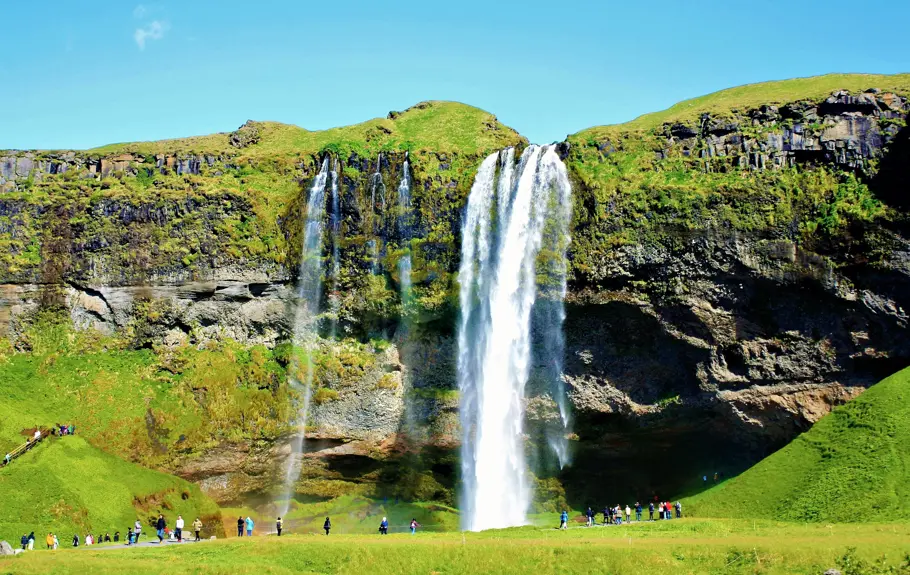
It's 11:30 PM. You're driving through a lava field, the road stretching out ahead of you in a straight line toward the horizon, and the sky is still glowing gold. There's no darkness coming. No urgency to find a bed before it gets late. It just stays like that, suspended somewhere between dusk and a sunrise that never quite happens.That is Iceland during the summer. And once you experience it, you'll understand why people keep coming back.
Summer is the peak season for a reason. The roads are open, the weather is as cooperative as Iceland ever gets, and the daylight transforms a road trip into something that feels unlike anywhere else on earth.
Whether you're planning a full Ring Road circuit or a shorter loop around the south coast, this guide covers everything you need to know - from building your itinerary to what to pack, how much to budget, and how to make the most of those long, golden evenings.
Why Summer Is the Best Time for an Iceland Road Trip
Iceland in winter has its appeal: northern lights, dramatic snowscapes, that cozy sense of hunkering down. But summer is when the country really opens up.
For starters, the highland roads (known as F-roads) are only accessible from roughly June through September. That means waterfalls, volcanic landscapes, and remote valleys that are simply off-limits during the rest of the year. The Ring Road, Iceland's main highway that circles the entire island, is paved and well-maintained, making it manageable even for first-time visitors.
Wildlife is another reason summer wins. Puffins nest along the cliffs from May to August, humpback whales are active in the waters off Húsavík, and Arctic foxes are raising cubs in the highlands. The waterfalls also run harder and more dramatically in summer, fed by snowmelt from the glaciers.
June, July, and August each have a slightly different character. June is the quietest of the three, slightly cooler, but fewer crowds and the longest days. July is the warmest and busiest, with hiking conditions at their best. August starts to feel the first whispers of autumn in the evenings, but the weather is still excellent and the light turns particularly warm and rich.
Understanding Iceland's Midnight Sun
A question a lot of first-time visitors have is: does it actually get dark in Iceland in summer?Around the summer solstice (June 20 - 21), the answer is basically no. The sun dips toward the horizon around midnight but never fully sets, the sky stays a deep, luminous blue that gradually shifts into peach and gold before brightening again. Even in early August, you'll only get a couple of hours of dim twilight rather than true darkness.
What does that mean practically? It means your body will lie to you. You'll be driving through stunning scenery at 9 PM thinking you have a couple more hours of daylight, and then suddenly it's 1 AM and you're still not tired because it looks like mid-afternoon outside.A sleep mask is non-negotiable. Most guesthouses and hotels have blackout curtains, but smaller accommodations don't always. Pack one and use it.
How the Midnight Sun Changes Your Road Trip
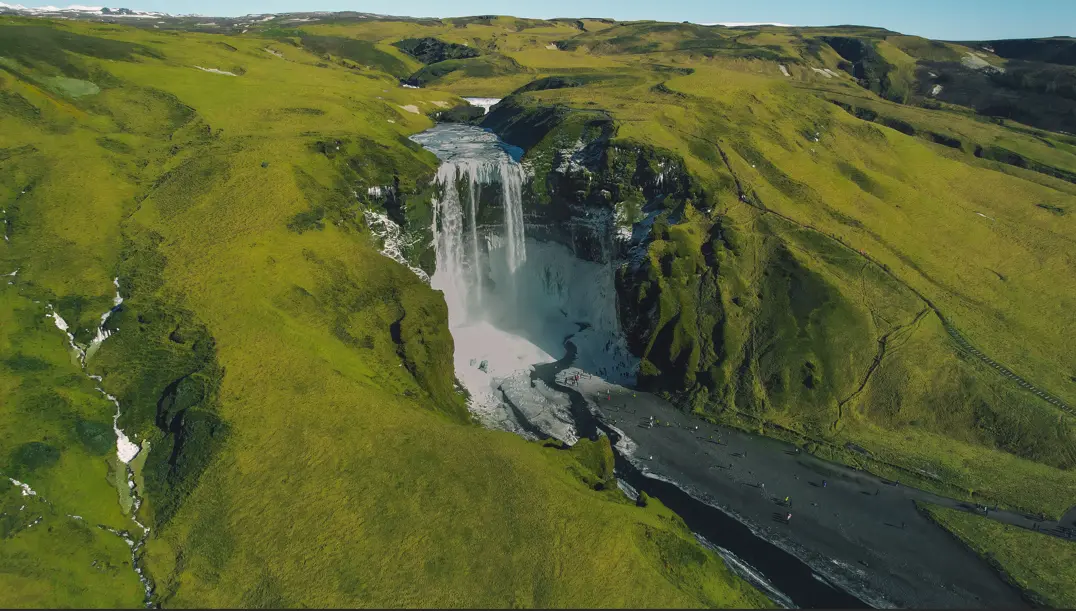
The midnight sun doesn't just extend your day, it completely changes how you travel. Popular waterfalls like Seljalandsfoss and Skógafoss are super busy during midday. At 10 PM? You might have them nearly to yourself, lit in soft golden light that photographers would pay anything for.
The golden hour in Iceland during summer doesn't last an hour. It can last three or four. The light stays low and warm, catching the edges of mountains, glinting off glacial rivers, and turning ordinary gravel roads into something cinematic. If you care about photography at all, plan to do your shooting late in the evening.
The flip side: you have to be intentional about rest. IT's easy to convince yourself you're not tired when the sun is still up at midnight. Build in actual stopping times, or you'll arrive at your next destination exhausted.
The Perfect Iceland Ring Road Summer Itinerary
Seven days is the sweet spot for a first Ring Road trip, enough to see the highlights without feeling like you're racing. Here's a framework to build from:
Day 1: Reykjavík and the Golden Circle
Start in the capital, pick up your rental car or campervan, and head east. The Golden Circle covers three of Iceland's most iconic sights: Þingvellir National Park (where the North American and Eurasian tectonic plates meet), the Geysir geothermal area (home to Strokkur, which erupts every five to ten minutes), and Gullfoss, a massive two-tiered waterfall that throws up a permanent rainbow on sunny days. If you time it right, end with a soak at the Secret Lagoon near Flúðir.
Day 2: The South Coast
This stretch of road might be the most dramatic in Europe. Stop at Seljalandsfoss (you can walk behind it) and Skógafoss, then continue to Reynisfjara, a black sand beach with basalt columns and roaring Atlantic waves. The scenery gets increasingly volcanic as you approach Vík, a tiny village perched between lava fields and the sea.
Day 3: Vík to Jökulsárlón
Continue east along the south coast past Eldhraun lava field, the Fjaðrárgljúfur canyon, and the edge of Vatnajökull, Europe's largest glacier. End the day at Jökulsárlón Glacier Lagoon, where icebergs the size of houses drift silently toward the sea. Just down the road, Diamond Beach is exactly what it sounds like — translucent ice chunks washed up on black sand.
Day 4: East Fjords
The East Fjords are the quietest and least-visited section of the Ring Road. The road winds through narrow fjords, past tiny fishing villages and reindeer grazing on hillsides. It's slower going, but the peacefulness feels like a deliberate counterpoint to the more dramatic sights elsewhere.
Day 5: North Iceland
The landscape opens up dramatically as you head north. Lake Mývatn is the highlight here — a geothermal wonderland of bubbling mud pools, lava formations, and hot springs. The Námafjall geothermal area nearby smells strongly of sulfur but looks genuinely alien. Bathe at Mývatn Nature Baths in the evening.
Day 6: Akureyri and Snæfellsnes
Iceland's second city, Akureyri, is worth a quick stop for coffee and a browse. From here you can loop toward the Snæfellsnes Peninsula, one of the most varied and beautiful areas in the country, a long finger of land jutting into the Atlantic, dominated by the Snæfellsjökull glacier volcano that inspired Jules Verne's Journey to the Centre of the Earth .
Day 7: Return to Reykjavík
Take the scenic route back, stop wherever catches your eye, and end with dinner in Reykjavík. You've earned it.
Best Places to Visit in Iceland During Summer
A few highlights worth mentioning individually:
- Golden Circle: The classic starter route for a reason. All three main stops are genuinely spectacular, and they're accessible from Reykjavík in a day.
- Seljalandsfoss: One of very few waterfalls in the world where you can walk behind the curtain of water. Visit late in the evening for the best light.
- Skógafoss: Taller and more powerful, Skógafoss is the kind of waterfall that makes you feel small in the best way. The hiking trail along the river above it is excellent.
- Reynisfjara Beach: The black sand and basalt columns are stunning, but this beach deserves real respect. Sneaker waves have injured visitors here; stay well back from the water.
- Jökulsárlón Glacier Lagoon: Hard to overstate how strange and beautiful this place is. The icebergs are blue-white and almost luminous, and the seal population seems entirely unbothered by tourists.
- Diamond Beach: Walk down the path from the parking area and you'll find yourself alone on a black sand beach littered with crystal-clear ice. Bring a wide-angle lens.
- Húsavík: Widely considered the whale watching capital of Iceland. In summer, humpback sightings are common, and the harbor town is charming.
- Snæfellsnes Peninsula: Often called "Iceland in miniature" because it packs glaciers, lava fields, fishing villages, sea cliffs, and volcanic craters into one relatively small area.
Driving in Iceland During Summer: What You Should Know
The Ring Road itself is straightforward, paved, well-signposted, and manageable in a standard rental car.
A few things to keep in mind:
- F-roads require a 4WD: These are the unpaved highland routes marked with an F on maps. Attempting them in a regular car will void your rental insurance and potentially strand you somewhere remote. If you want to venture into the highlands, book a 4WD or join a tour.
- Speed limits are lower than you'd expect: 90 km/h on most paved roads, dropping to 80 km/h on gravel. Speed cameras are common and fines are steep.
- Fuel stations can be far apart: Particularly in the East Fjords and the north, don't let your tank get below half before looking for the next station.
- Weather changes fast: A clear morning can turn into a horizontal rain squall by afternoon. Check the Icelandic Meteorological Office app before any hike and always keep a waterproof jacket within reach.
- Sheep have right of way: No one warns you about this sufficiently. Icelandic sheep roam freely and will wander onto the road without warning, including around corners. Slow down in rural areas.
- Single-lane bridges: You'll encounter these across the country. The rule: whoever gets there first has right of way. Approach slowly and be ready to yield.
How Much Does an Iceland Summer Road Trip Cost?
Iceland has a reputation for being expensive, which is fair but it's also manageable with realistic expectations.
Here's a rough guide in USD:
| Category | Approximate Cost |
|---|---|
| Accommodation (hotel/guesthouse) | $120 - 350 per night |
| Campervan rental | $150 - 300 per day |
| Standard rental car | $80 - 180 per day |
| Petrol | ~$2.30 - 2.80 per liter |
| Restaurant meal | $20 - 50 per person |
| Coffee | $5 - 7 |
A mid-range traveler staying in guesthouses and eating a mix of restaurant meals and supermarket food can expect to spend around $250 to 450 per day including transport, accommodation, and activities. Campervans are a popular option for keeping costs down, you skip nightly accommodation fees and gain flexibility. Cooking your own meals makes a significant difference. Supermarkets like Krónan and Bónus (the one with the pink pig logo) are well-stocked and reasonably priced by Icelandic standards.
What to Pack for Iceland in Summer
Iceland in July can feel like a crisp October day somewhere else. Don't let the word "summer" lead you into packing only t-shirts.
- Waterproof jacket: non-negotiable, wear it constantly
- Fleece or mid-layer
- Hiking boots with ankle support
- Lightweight gloves (yes, even in July)
- Sleep mask: critical for the midnight sun
- Reusable water bottle: tap water is excellent everywhere
- Swimsuit for hot springs and geothermal pools
- Power bank
- Camera (your phone will do more than fine)
- Universal adapter (Iceland uses the European two-pin standard)
- Motion sickness tablets if you're prone because the fjord roads are winding
Layering is the strategy. Temperatures typically range from 8–15°C (46–59°F) in summer, but wind and rain can make it feel significantly colder.
Staying Connected on Your Iceland Road Trip
When you're navigating remote roads, checking weather updates, finding the next fuel station, or booking a last-minute campsite, reliable mobile data matters more than you'd think. Rather than scrambling for a local SIM card after landing, many people now activate an eSIM before departure.
Our Maaltalk Iceland eSIM lets you connect as soon as you step off the plane, no SIM swapping, no waiting in a mobile store queue, just activation on your phone before you even pack.
Throughout the trip, you'll use it constantly: Google Maps on gravel roads, the Icelandic Met Office app for weather, booking accommodation when plans change, and keeping in touch while you're out of WiFi range.

Tips for Making the Most of Iceland's Midnight Sun
A few things that make a real difference:
Don't rush
The extra daylight tempts you to pack in more stops than you reasonably should. Leave room for the unexpected detour, the unplanned stop at a viewpoint, the impromptu hot spring.
Visit popular sites after dinner
Seljalandsfoss at 10 PM in golden light with a handful of other visitors beats Seljalandsfoss at 2 PM with tour buses.
Photograph in the evening
The light between 9 PM and midnight during summer is some of the most beautiful you'll ever shoot in. Plan to be somewhere photogenic during that window.
Book accommodation early
Summer is the peak season and popular areas fill up months in advance. Especially if you're targeting guesthouses rather than campsites.
Keep flexible plans
Iceland's weather will rearrange your itinerary at some point. That's not a problem — it's part of the experience. Some of the best moments come from pivoting when the original plan falls through.
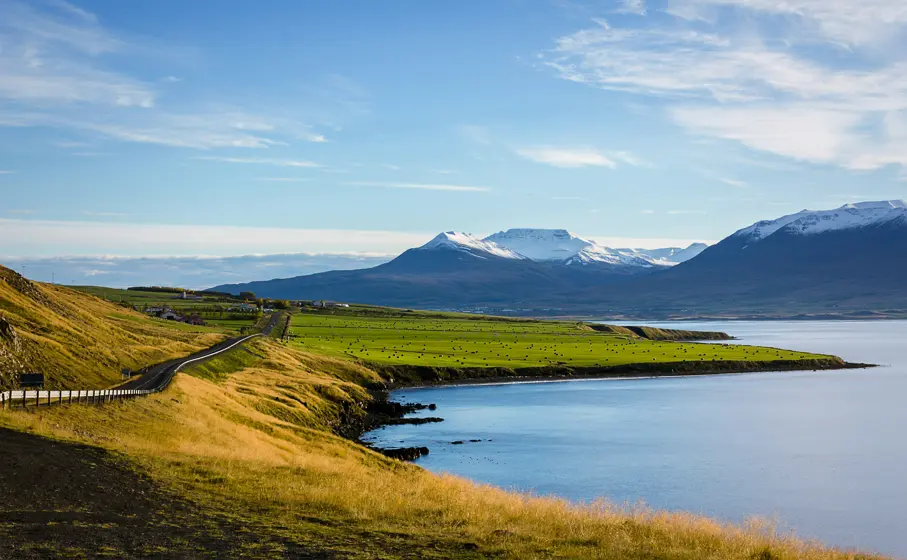
Iceland in summer isn't really about ticking off waterfalls or glaciers, though you'll see plenty of both. It's about the way the endless daylight changes the rhythm of travel entirely — the feeling of driving through lava fields at midnight under a pink sky, eating dinner at 9 PM with the sun still high, arriving at a viewpoint you expected to be crowded and finding it empty.
The midnight sun turns every part of the Ring Road into something worth stopping for. Whether you have a week to loop the whole island or just a few days around the south coast, you'll leave with the distinct sense that Iceland operates on its own rules, and in summer, those rules happen to be extraordinary.
FAQ: Iceland in Summer
1. Is summer the best time to visit Iceland?
For most travelers, yes. Summer brings long daylight hours, open roads (including the highland F-roads), easier driving conditions, wildlife sightings, and access to all of the country's major attractions. It's the most practical season for a comprehensive road trip.
2. Does it ever get dark in Iceland during summer?
Around the summer solstice, the sky barely dims overnight — true darkness doesn't really happen. Even in late July and August, you're looking at a couple of hours of twilight rather than a proper night. A sleep mask is essential.
3. How many days do you need for an Iceland road trip?
Seven to ten days is ideal for the full Ring Road. Shorter trips of four to five days work well if you focus on the south coast and Golden Circle. Less than three days and you'll feel rushed.
4. Is driving in Iceland easy during summer?
For most visitors, yes. The Ring Road is paved and well-maintained. The main things to watch for are sudden weather changes, gravel road sections, single-lane bridges, and free-roaming sheep. Stick to paved roads in a standard rental car and you'll be fine.
5. How expensive is an Iceland summer trip?
A mid-range traveler can expect to spend around $250 to 450 per day covering accommodation, transport, food, and activities. Campervans and self-catering can bring that down noticeably. It's not cheap, but it's rarely as extreme as people fear if you plan ahead.
6. Do I need mobile data for an Iceland road trip?
Reliable mobile data is genuinely useful for navigation on remote roads, checking weather forecasts, finding fuel stations, and booking last-minute campsites. Many people set up an eSIM like the Maaltalk Iceland eSIM before departure so they have connectivity from the moment they land, without needing to find a local SIM card after arrival.
