Free 1GB eSIM inside app





Best eSIM for Singapore Travel (2026 Guide)
March 26, 2026

Landing in Singapore is exciting until you realize you need data immediately. Whether it’s booking a Grab from the airport, checking into your hotel, or pulling up Google Maps, being offline even for a few minutes can feel surprisingly inconvenient.
You could rely on roaming, but that usually comes with a daily fee that adds up quickly. You could also buy a SIM card at the airport, but that often means waiting in line, showing ID, and swapping out your physical SIM.
This is exactly why eSIMs have become the go-to solution. They’re fast to set up, easy to use, and in most cases, cheaper than traditional options.
In this guide, we’ll break down the best eSIM for Singapore, compare real providers (including local ones many blogs overlook), and help you choose the right plan based on how you actually use your phone when traveling.
Why Use an eSIM in Singapore?
Singapore is one of the most connected cities in the world. You’ll likely use your phone for almost everything - navigation, transport, payments, restaurant searches, and even ordering food.
Having data ready from the moment you land just makes everything smoother.
No airport detours
Instead of searching for a SIM card kiosk, you can walk straight out of the airport and get moving.
No daily roaming charges
Roaming from US carriers often costs $10 - $15 per day. Over a week, that’s easily $70 - $100+.
Instant setup
A Singapore eSIM can be installed in minutes, usually just by scanning a QR code.
No physical SIM swapping
Your main SIM stays in your phone, which means no risk of losing it.
eSIM vs SIM vs Roaming
| Option | Convenience | Cost | Effort |
|---|---|---|---|
| eSIM | Very high | Medium | Very low |
| Physical SIM | Medium | Medium | Medium |
| Roaming | High | Very high | Very low |
For most people, eSIM is the easiest and most practical Singapore SIM card alternative.
Best eSIM Providers for Singapore (Detailed Comparison)
Not all eSIMs are the same. Some are cheap but limited, others offer unlimited data but at a premium. Here’s how the main providers compare in real-world use.
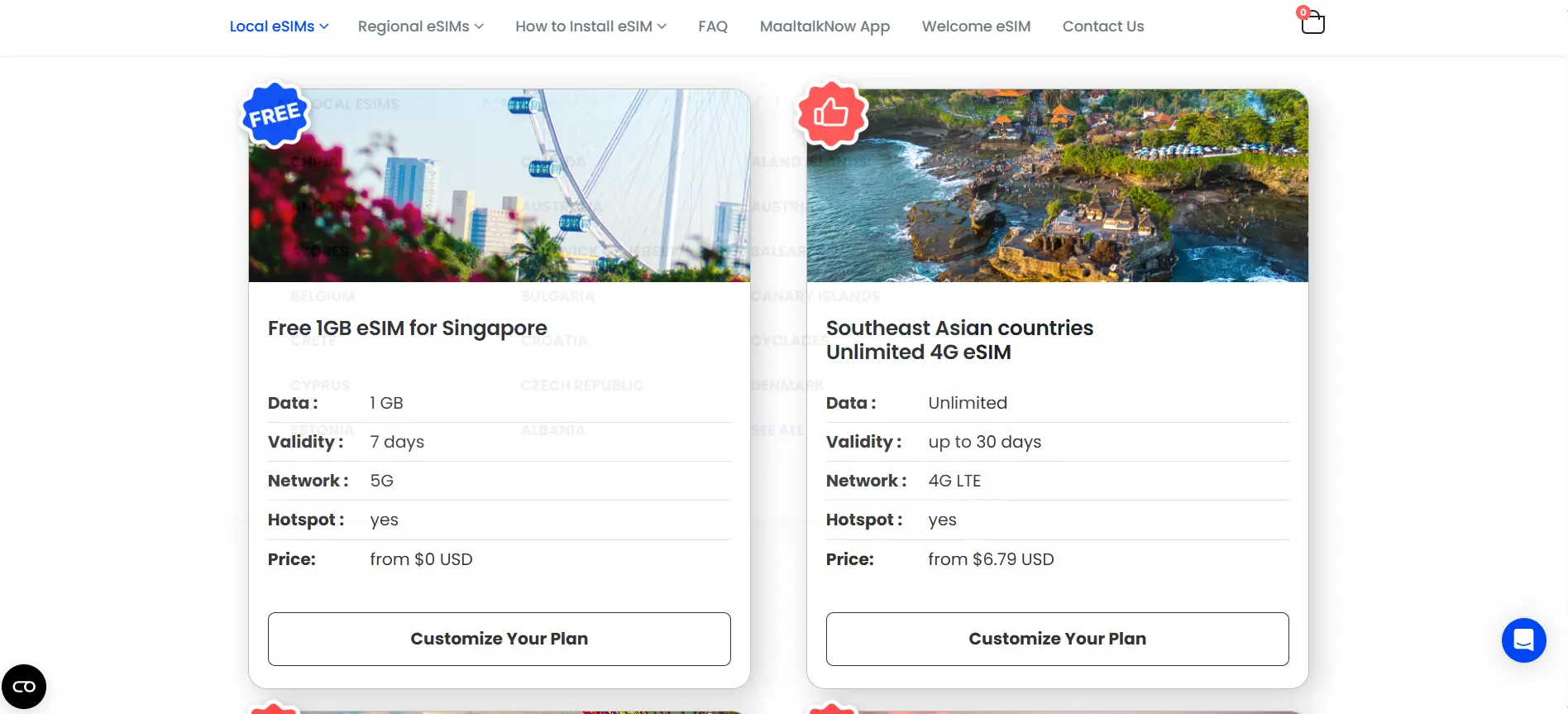
1. Maaltalk eSIM
Our Maaltalk eSIM stands out because it gets the basics right - fast connection, fair pricing, and no unnecessary complications.
It connects to strong local networks in Singapore, which means you’ll get reliable speeds whether you’re navigating downtown, uploading photos, or streaming content during downtime.
Pricing is also one of its biggest advantages. Compared to many competitors, Maaltalk offers better value per GB, especially for mid-range plans where most people fall.

Setup is simple:
- Purchase online
- Scan the QR code
- You’re connected within minutes
There’s no need for apps, no confusing activation steps, and no hidden limitations.
What makes it the best choice:
- Consistent performance across Singapore
- Competitive pricing in USD
- Quick and easy setup
- Works well for both short and longer stays
2. Airalo
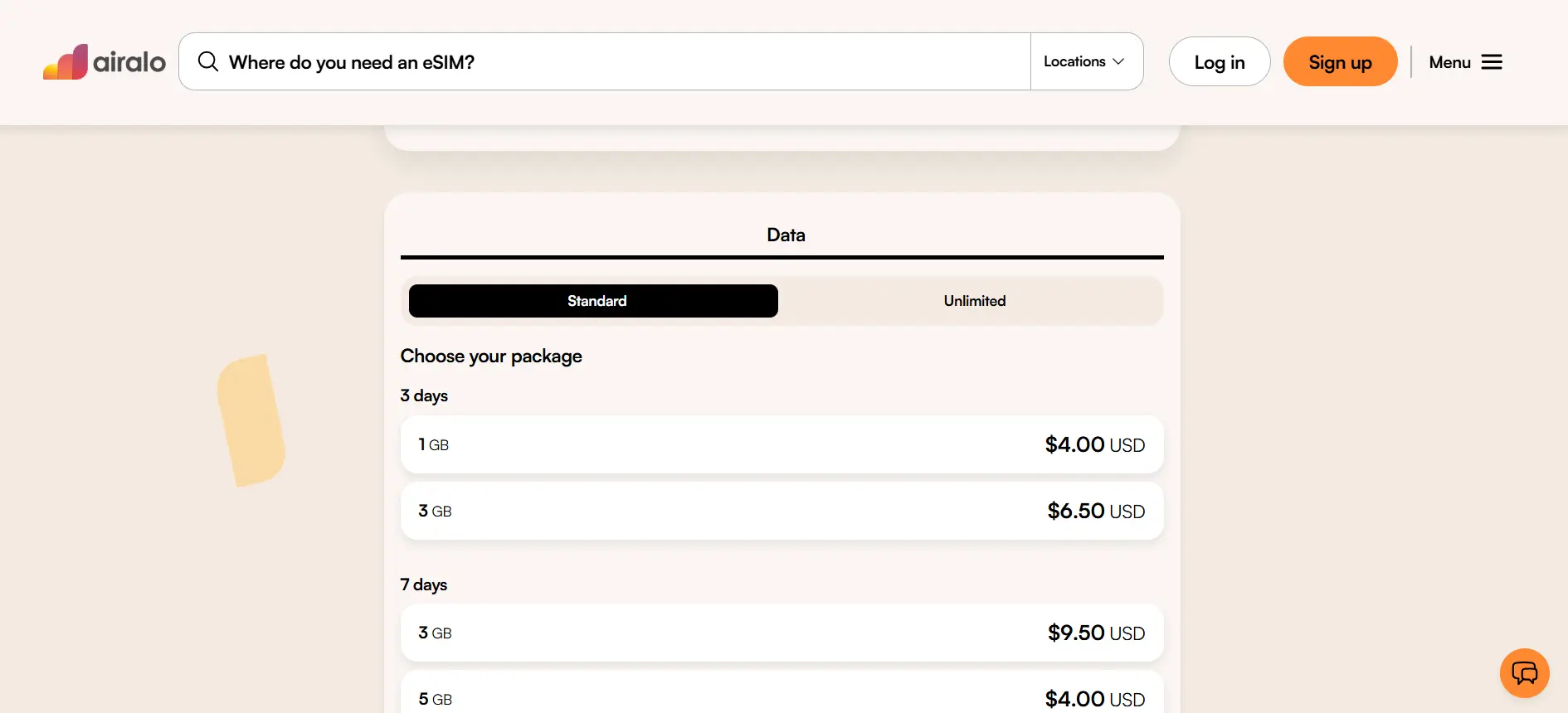
Airalo is one of the most widely used names in the eSIM Singapore travel space. It’s often the first option people come across, mainly because of its low entry prices and global availability.
The smaller data plans are affordable and work fine for light usage like maps and messaging. However, once you move into higher data tiers, the pricing becomes less competitive.
Where it works well:
- Short trips with light data usage
- Budget-focused options
Where it falls short:
- Limited value for larger data packages
- Speeds can vary depending on the plan
3. Nomad eSIM
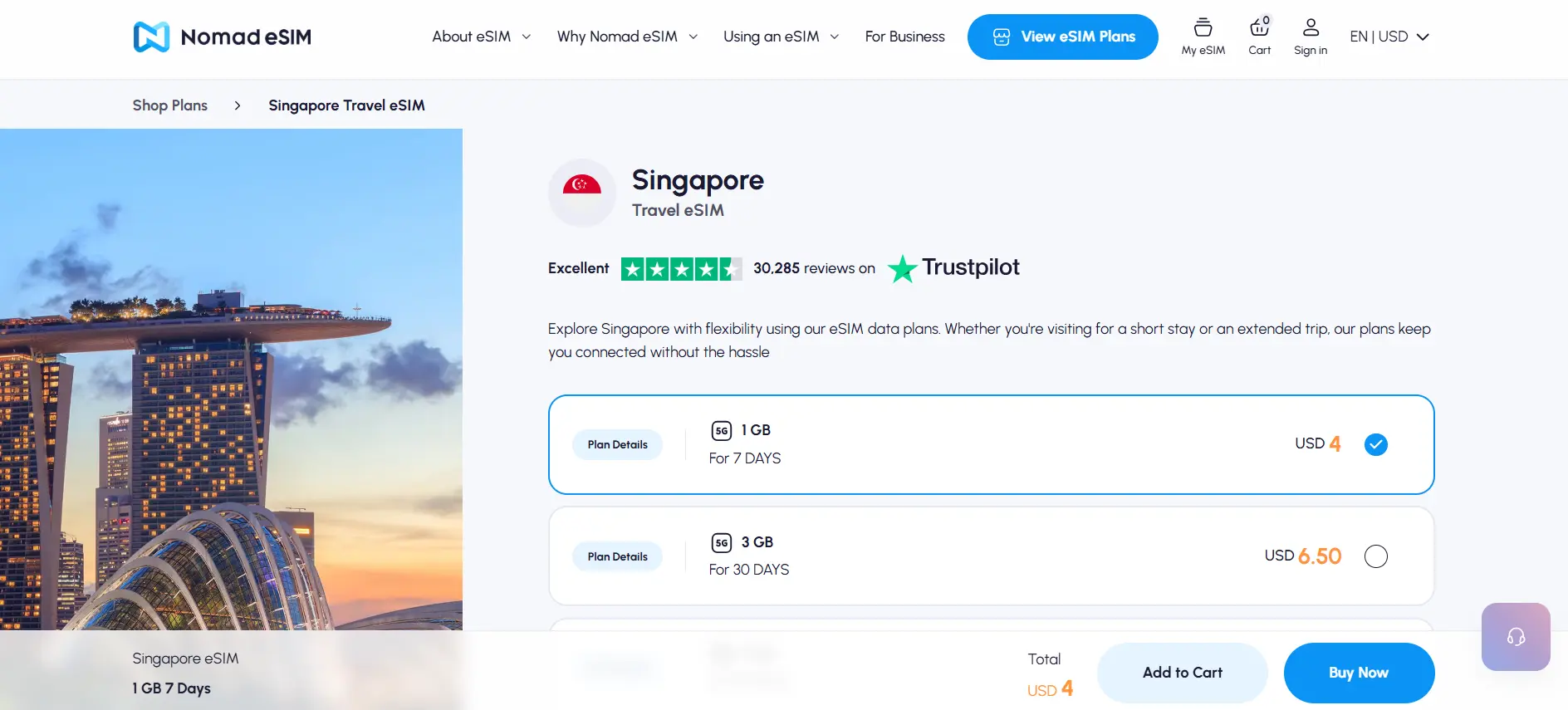
Nomad is a solid option if Singapore is just one stop on a longer trip. Instead of buying separate plans for each country, you can use a regional plan that covers multiple destinations in Southeast Asia. The app experience is smooth, and setup is straightforward. That said, pricing tends to be slightly higher compared to more value-focused providers.
Best for:
- Multi-country travel
- People who want flexibility across Asia
4. Holafly
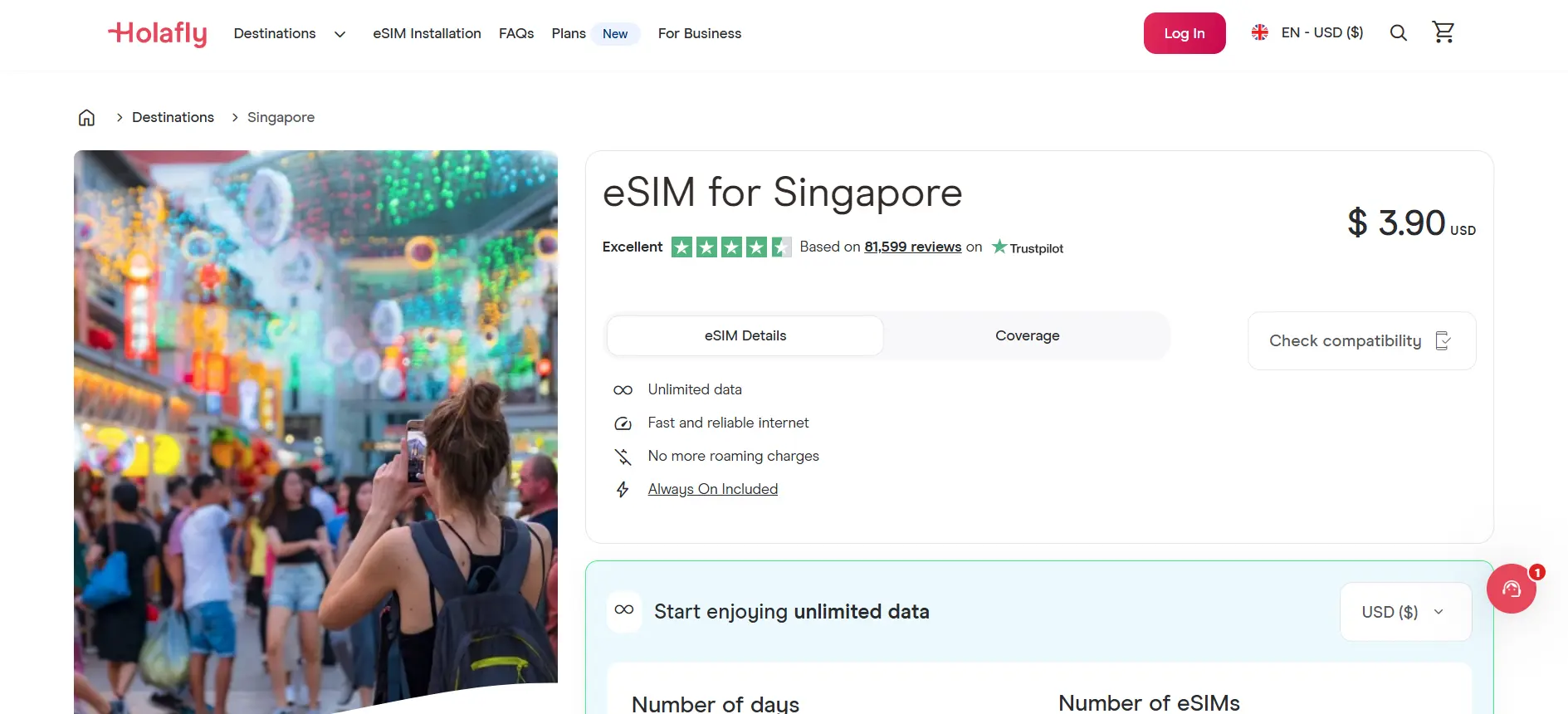
Holafly focuses on one thing: unlimited data. If you don’t want to think about how much data you’re using, this can be a convenient option. It’s especially useful if you’re streaming, working remotely, or constantly online.
That convenience comes at a price, though. Holafly is usually more expensive than other providers, and hotspot usage can be limited depending on the plan.
Best for:
- Heavy data usage
- Remote work or streaming
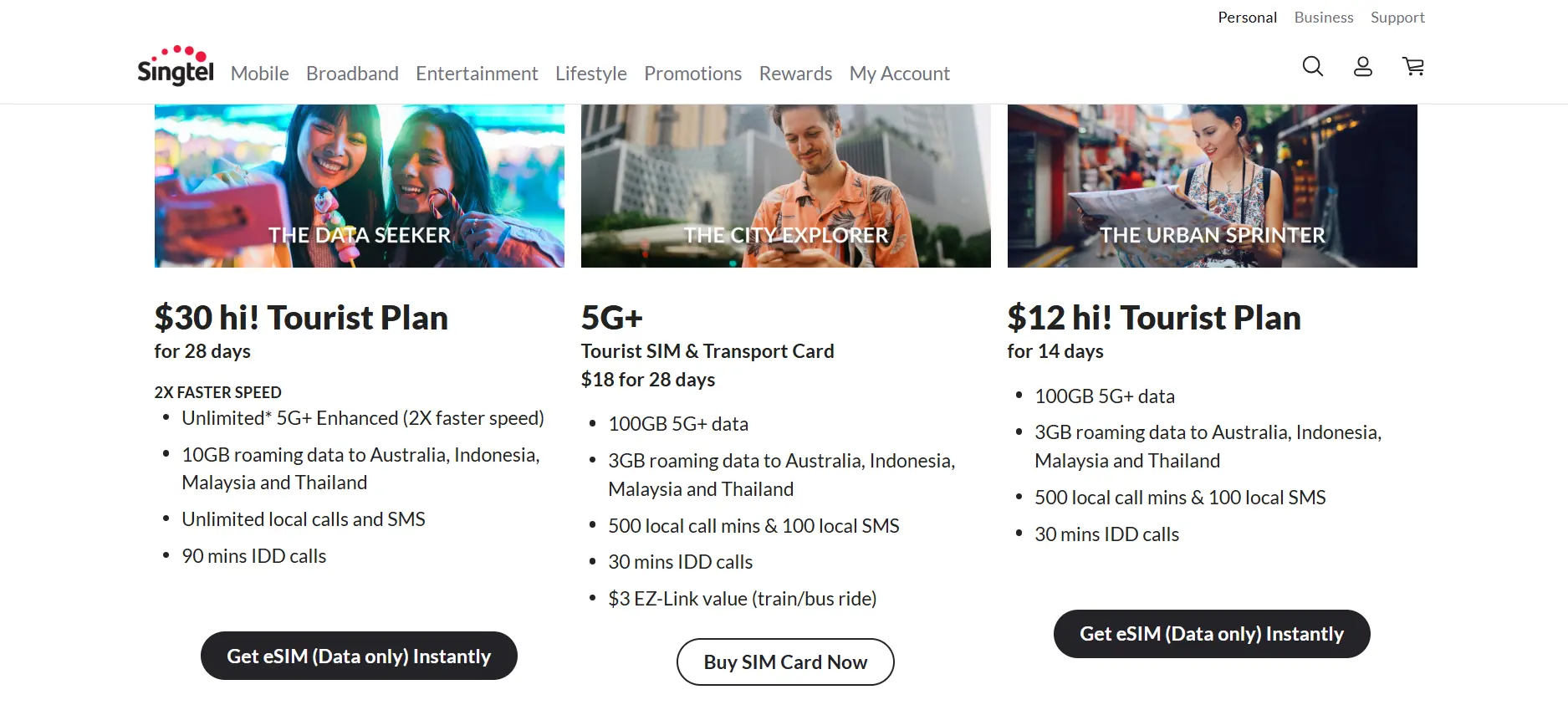
5. Singtel Tourist eSIM
Singtel is the largest telecom provider in Singapore, so naturally, coverage and speed are excellent.
The main difference compared to global eSIM providers is the setup process. It can involve ID verification and slightly more steps, which makes it less convenient if you’re looking for something quick and simple.
Best for:
- Those who prefer a local carrier
- High data plans with strong coverage
6. StarHub / M1 eSIM
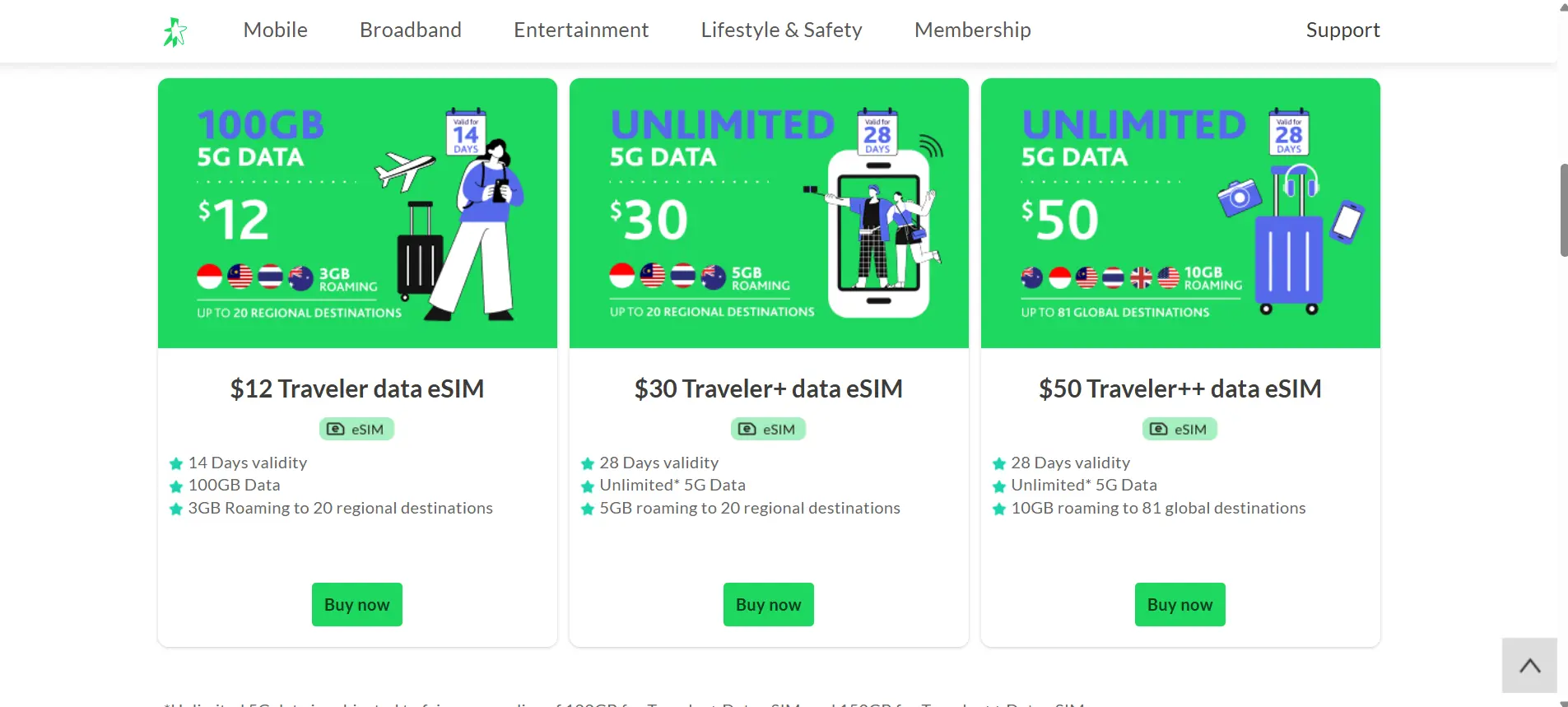
StarHub and M1 are also major telecom providers in Singapore, offering reliable network infrastructure.
While performance is strong, the experience is not always optimized for visitors. Purchasing and activating plans can feel less intuitive compared to global eSIM platforms.
Best for:
- Those comfortable navigating local telecom options
eSIM Singapore Comparison Table
| Provider | Price (USD) | Data | Validity | Best For |
|---|---|---|---|---|
| Maaltalk | From $1.10 | 1GB - Unlimited | 1 - 30 days | Best overall value |
| Airalo | From $4.00 | 1GB - Unlimited | 3 - 30 days | Budget plans |
| Nomad | From $4.00 | 1GB - Unlimited | 5 - 30 days | Regional travel |
| Holafly | From $3.90 | Unlimited | 5 - 30 days | Heavy usage |
| Singtel | From $12 | 100GB - Unlimited | 7 - 28 days | Local reliability |
| StarHub/M1 | From $12 | 100GB - Unlimited | Varies | Local alternatives |
How to Buy and Activate an eSIM for Singapore
Getting set up takes just a few minutes, and you can do everything before your trip.
Step-by-step:
- Choose your provider
- Buy your plan online
- Receive your QR code by email
- Scan the QR code in your phone settings
- Activate it before departure or upon arrival
If you install it before your flight, your Singapore eSIM will connect automatically once you land.
How Much Data Do You Need in Singapore?
It’s easy to underestimate how much data you’ll use.
Light usage (1 - 3 GB)
- Google Maps
- Messaging apps
- Occasional browsing
Moderate usage (5 - 10 GB)
- Social media (Instagram, TikTok)
- Frequent navigation
- Watching short videos
Heavy usage (Unlimited)
- Streaming Netflix or YouTube
- Video calls
- Using hotspot for a laptop
If you’re unsure, going slightly higher is usually the safer option - especially in a city where you’re constantly online.
Is eSIM Better Than a SIM Card in Singapore?
In most cases, yes - it’s simply more convenient.
Why eSIM works better:
- No physical SIM swapping
- Faster setup
- No store visits
When a SIM card might still make sense:
- Older phones without eSIM support
- Very specific local plans
Tips for Using eSIM in Singapore
A few small things can make a big difference:
- Check that your phone supports eSIM
- Install your eSIM before traveling
- Turn off roaming on your main SIM
- Keep an eye on your data usage
- Use Wi-Fi when available to save data
Common Mistakes to Avoid
These are easy to overlook:
- Waiting until arrival to install your eSIM
- Choosing too little data
- Not checking compatibility
- Assuming all “unlimited” plans are the same
Which eSIM Should You Choose?
If you want something that just works without overthinking it, Maaltalk is the best eSIM for Singapore.
It offers:
- Reliable speeds
- Fair pricing
- Simple setup
That said, the right choice depends on what you need:
- Go with Holafly if unlimited data is a priority
- Choose Airalo for the lowest starting price
- Pick Nomad if you’re traveling across multiple countries
For everything else, Maaltalk delivers the best overall experience.
FAQ: eSIM Singapore
1. What is the best eSIM for Singapore?
Yes, eSIM is fully supported in Singapore by both global providers and local telecom companies.
2. Is eSIM available in Singapore?
Yes, eSIM is fully supported in Singapore by both global providers and local telecom companies.
3. Can I use eSIM before arriving in Singapore?
Yes, you can install your eSIM before departure and activate it when you arrive.
4. How much does an eSIM for Singapore cost?
Prices usually range from $4 to $60, depending on the data plan and duration.
5. Which eSIM has unlimited data in Singapore?
Holafly offers unlimited data plans, though they tend to be more expensive than fixed-data options.
6. Is eSIM faster than a SIM card in Singapore?
Speed depends on the network, not the format. Most eSIMs use the same networks as SIM cards, so performance is similar.
7. Do I need an ID to buy an eSIM in Singapore?
Most global providers do not require ID, but local providers like Singtel may ask for verification.
