Free 1GB eSIM inside app





Best eSIMs for Bali & Indonesia: Complete Traveler Guide (2026)
January 12, 2026
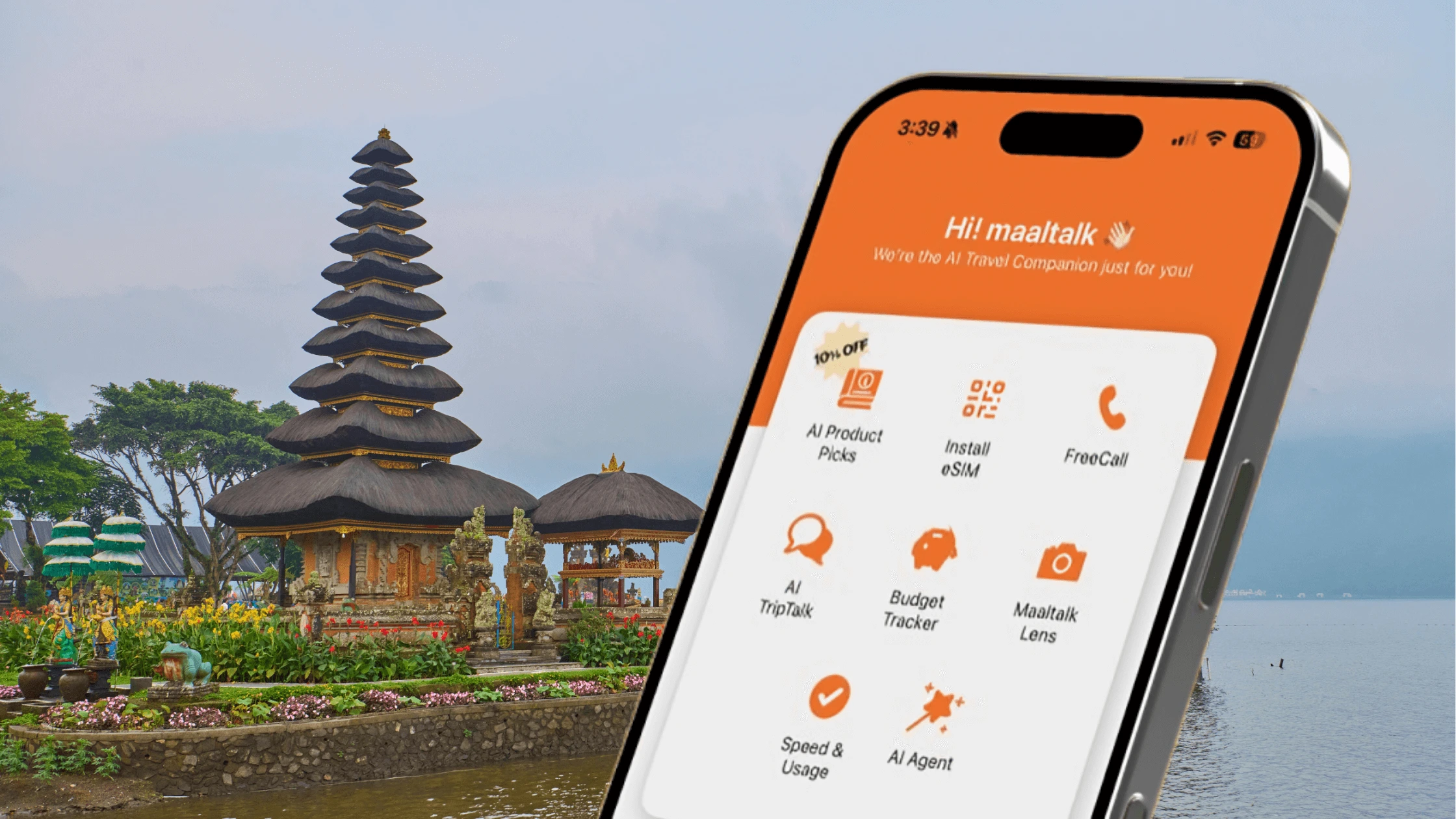
Bali is one of the most visited destinations in Southeast Asia, attracting everyone from first-time vacationers to long-term digital nomads. While the island is famous for its beaches, temples, and cafés, one thing travelers quickly realize is that having reliable mobile internet is essential for getting around and enjoying the trip smoothly.
From using Google Maps to navigate narrow roads, booking scooters and airport transfers, ordering food through Grab or Gojek, checking restaurant reviews, translating menus, or joining video calls from a café - mobile data plays a role in almost every part of daily travel in Bali.
For years, travelers relied on buying a local SIM card after arrival. Today, global eSIMs have become the most convenient and flexible way to get mobile data in Bali and across Indonesia. With an eSIM, you can purchase your plan online, install it before departure, and connect immediately upon landing - no kiosks, no queues, and no paperwork.
This guide breaks down the best eSIMs for Bali and Indonesia in 2026, compares coverage and pricing, explains how mobile networks work locally, and helps you choose the right plan based on your travel style, length of stay, and data needs.
Why Use an eSIM in Bali?
Using an eSIM instead of a physical SIM card offers clear advantages for most travelers visiting Bali.
Key Benefits of Using an eSIM
- Instant connectivity on arrival: With an eSIM installed before your flight, you can connect to mobile data as soon as you land at Ngurah Rai International Airport.
- No SIM card swapping: Keep your home SIM active for banking codes, authentication messages, and calls while using the eSIM exclusively for data.
- No registration or passport handling: Local SIM cards often require passport registration and manual activation, while eSIMs skip this entirely.
- Works across Indonesia: Most Indonesia eSIMs work not only in Bali, but also in Lombok, Java, Flores, and other popular destinations.
- More secure than public Wi-Fi: Hotel and café Wi-Fi can be slow or unsecured. Mobile data is safer for logins and payments.
- Ideal for both short trips and long stays: Whether you’re visiting for five days or five months, eSIM plans scale easily.
eSIM vs Local SIM vs Pocket Wi-Fi
Local SIM cards: Often cheap, but require visiting a store, passport registration, and sometimes limited English support.
Pocket Wi-Fi: Reliable but expensive, bulky, and requires daily charging and carrying an extra device.
eSIMs: The most convenient option for most travelers: no physical hardware, instant activation, and flexible plans.
How Mobile Coverage Works in Bali & Indonesia
Understanding Indonesia’s mobile network landscape helps explain why some eSIMs perform better than others.
eSIM vs Local SIM vs Pocket Wi-Fi
- Telkomsel: The largest and most reliable network in Indonesia, with the best nationwide coverage.
- Indosat Ooredoo: Strong in cities but weaker in rural and mountainous areas.
- XL Axiata: Good urban performance, less consistent outside main towns.
Most high-quality eSIMs for Bali prioritize Telkomsel connectivity, which is why they tend to offer more stable performance across the island.
4G vs 5G in Bali
- 4G LTE is widely available and remains the most reliable option.
- 5G exists in select urban areas but is not yet consistent across the island.
- Travelers should prioritize coverage and stability over advertised 5G speeds.
Where Coverage Is Best in Bali
You’ll generally experience excellent connectivity in:
- Canggu
- Seminyak
- Ubud
- 0000
- Denpasar
In more remote areas, like mountain roads, isolated beaches, or smaller islands, speeds can drop, making network choice especially important.
Best eSIMs for Bali & Indonesia (2026)
Below are the best-performing eSIM options based on coverage, ease of use, pricing, and traveler feedback.
Quick Comparison Table
| Provider | Data Type | Speed | Example Data Options Available |
|---|---|---|---|
| Maaltalk | Daily | 4G/5G | 7 days + 2GB/day US$ 7.80 |
| Airalo | Fixed data | 4G | 7 days + 10GB US$ 19.00 |
| Jetpac | Fixed data | 4G | 7 days + 10GB US$ 14.00 |
| Telkomsel (Tourist eSIM) |
Fixed data | 4G/5G | 30 days + 3GB US$ 1.19 |
| Holafly | Unlimited | 4G | 7 days + unlimited GB US$ 27.30 |
| Saily | Fixed data | 4G | 30 days + 10GB US$ 21.99 |
1. Maaltalk - Best Overall eSIM for Bali & Indonesia
Maaltalk offers one of the most balanced Bali Indonesia eSIM options for travelers visiting Bali and other parts of Indonesia. Its plans are designed specifically for travel use, focusing on reliability, ease of setup, and strong local network performance.
Why Maaltalk is a Great Choice for Bali
- Connects to major Indonesian networks, prioritizing strong coverage
- Simple QR-code installation before travel
- Plans designed for Bali and multi-island travel
- Stable speeds for maps, ride-hailing apps, messaging, and work tools
- Free 1GB eSIM available
- Free AI travel app MaaltalkNow
Unlike some global eSIMs that route traffic internationally, Maaltalk’s Indonesia eSIM is optimized for local performance, resulting in better latency and consistency.
Best for: Travelers who want dependable coverage, straightforward pricing, and a hassle-free setup experience. Plus you can also test our eSIM first by making use of our free 1GB eSIM offer.

2. Airalo
Airalo is one of the most widely used travel eSIM brands worldwide and a common choice for Bali visitors.
Pros
- Affordable entry-level plans
- User-friendly mobile app
- Fast installation process
Cons
- Data-only (no phone number)
- Limited high-data options
Best for: Short stays, light browsing, navigation, and messaging.
3. Jetpac
Jetpac frequently appears in Reddit threads and traveler forums as one of the most cost-effective eSIM options for Indonesia.
Pros
- Excellent value per GB
- Uses strong local networks like Telkomsel
- Flexible data sizes
Cons
- No unlimited plans
- Smaller brand presence
Best for: Budget travelers who want maximum data at the lowest cost.
4. Telkomsel
Telkomsel’s tourist eSIM offers the same network quality as a local SIM without needing a physical card.
Pros
- Strongest coverage across Bali and Indonesia
- Often includes a local phone number
- Supports hotspot and 5G where available
Cons
- More setup steps
- Slightly higher pricing
Best for: Travelers who want the most “local” mobile experience possible.
5. Holafly
Holafly specializes in unlimited data eSIMs, which are popular among heavy users.
Pros
- Unlimited data plans
- Simple activation
- No data tracking stress
Cons
- Fair-use throttling after heavy usage
- Higher cost than fixed plans
Best for: Remote workers, hotspot users, and heavy streamers.
6. Saily
Saily is frequently recommended for its balance of performance and ease of use.
Pros
- Stable performance
- Clear pricing
- Simple setup
Cons
- Fewer plan variations
Best for: Travelers who want a dependable, no-frills option.
Other Popular eSIMs Travelers Mention
These providers are commonly discussed in travel communities:
- BNESIM
- Ubigi
- Yesim
- Roamless
- Maya Mobile
They are solid alternatives but usually less optimized for Bali-specific travel than the main options above.
How Much Data Do You Need in Bali?
Your data needs depend heavily on how you travel.
- 3–5 GB: Maps, messaging, light browsing
- 10–20 GB: Social media, ride-hailing, daily browsing
- Unlimited: Remote work, video calls, hotspot use, streaming
Apps like Google Maps, Grab, Gojek, WhatsApp, and Google Translate are used constantly in Bali - even on short trips.
How to Set Up an eSIM for Bali (Step-by-Step)
- Confirm your phone supports eSIM and is unlocked
- Purchase your eSIM online before departure
- Scan the QR code provided
- Activate the eSIM upon arrival
- Set it as your primary data line
The entire process typically takes less than five minutes.
Bali is an easy destination to stay connected - as long as you choose the right mobile data solution. It’s also one of the reasons many travelers find Bali especially appealing during the cooler months, when escaping winter becomes a priority.
For most visitors, eSIMs provide the best balance of convenience, reliability, and value, removing the friction of physical SIM cards and in-person registration. By understanding how coverage works, estimating your data needs, and comparing providers carefully, you can arrive in Bali fully connected and focus on enjoying the island instead of troubleshooting your internet connection.
Frequently Asked Questions (FAQ)
1. Do eSIMs work everywhere in Bali?
Yes, coverage is excellent in most tourist areas. Remote regions may have slower speeds.
2. Is an eSIM better than a local SIM in Bali?
For most travelers, yes. Bali eSIMs save time and avoid registration hassles.
3. Can I hotspot with a Bali eSIM?
Most providers allow hotspot use, but always check plan details.
4. Does Bali have 5G?
Yes, but 4G LTE remains more reliable across the island.
5. Can one eSIM work across Indonesia?
Yes, most Indonesia eSIMs support multiple islands.
6. Do I need a local phone number in Bali?
Usually not. WhatsApp covers most communication needs.