Free 1GB eSIM inside app





7 Best eSIMs for South Korea: Complete Guide for Travelers (2026)
December 16, 2025
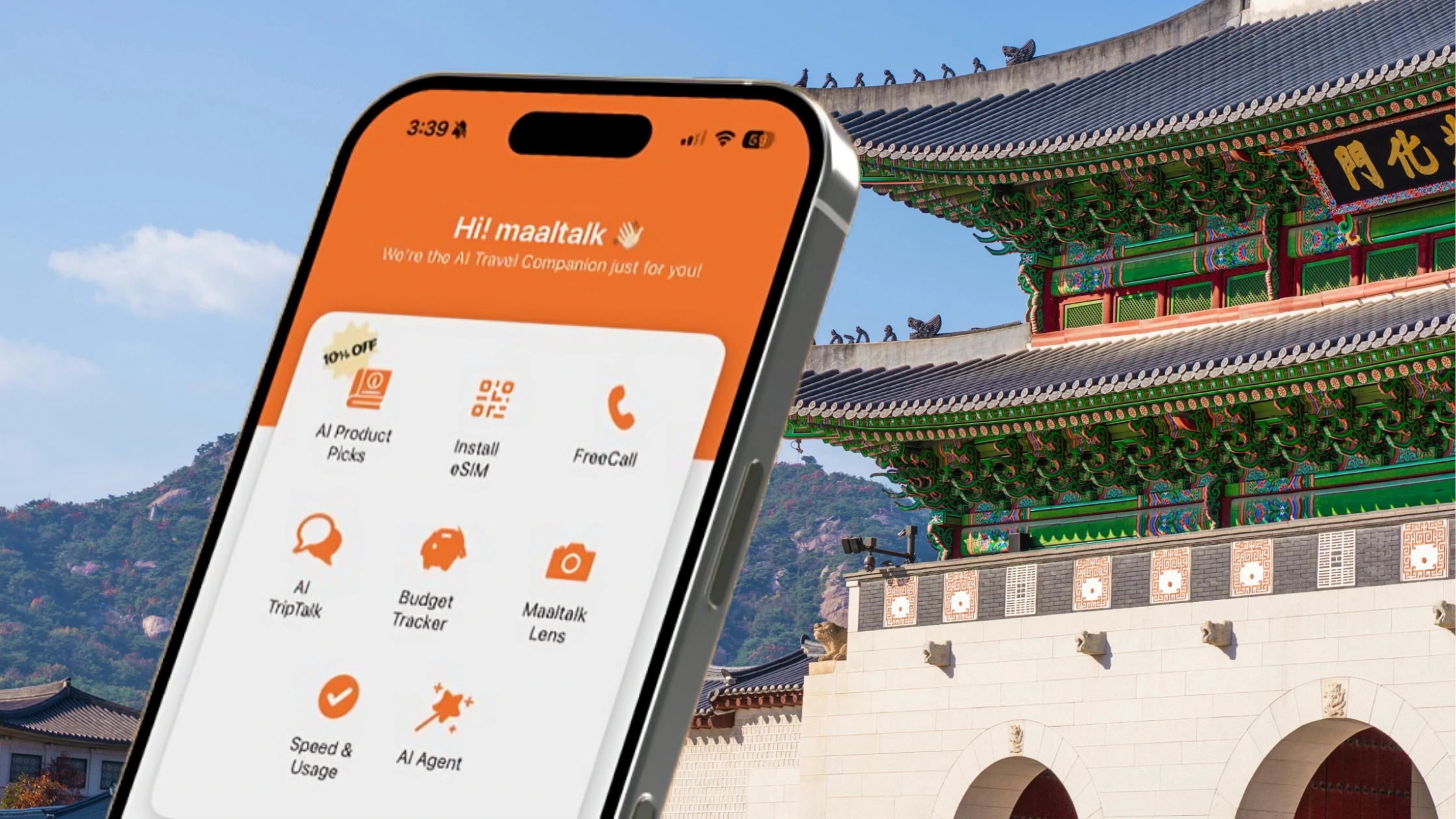
South Korea is one of the most connected countries in the world, and staying online during your trip is essential, whether you want fast navigation, instant translation, restaurant reservations, or effortless access to K-culture hotspots. An eSIM is the easiest way to get reliable mobile data without visiting a store, swapping SIM cards, or dealing with complicated activation steps.
This guide breaks down the best eSIMs for South Korea, compares top providers, explains the differences between local Korean MVNOs and global brands, and helps you choose the right plan based on trip length, data usage, and budget.
Why Use an eSIM in South Korea?
Choosing an eSIM instead of a physical SIM offers several traveler-friendly benefits:
- Instant activation: get connected the moment your flight lands in Seoul, Busan, or Jeju.
- No need to remove your home SIM: safer for banking codes and two-factor authentication.
- Data plans starting under $10: far cheaper than international roaming.
- 5G availability: South Korea has some of the world’s fastest mobile networks.
- Great for short trips: perfect for 3 - 15 day vacations.
Because South Korea is extremely mobile-data friendly, even heavy users rarely struggle with coverage or speed, as long as they choose a good provider.

*Please note that this discount code is only valid for Korea-related eSIM products
Best eSIM Providers for South Korea (Overview)
Below is a quick comparison before we dive into provider-by-provider details:
| Provider | Best For | Hotspot | Network Quality | Example Data Options Available |
|---|---|---|---|---|
| Maaltalk | Overall value, fast 5G, flexible plans | Yes | Excellent |
• 3 days + 5GB |
| Airalo | Short trips, light users | Yes | Good |
• 3 days + 3GB |
| Nomad | Flexible medium-to-heavy usage | Yes | Very good |
• 3 days + unlimited GB |
| Ubigi | Multi-country trips | Yes | Very good |
• 7 days + 3GB |
| Holafly | Heavy data users (streaming/constant hotspot) | Limited per plan | Good |
• 3 days + unlimited GB |
| Woori Mobile | Local unlimited SIM experience | Yes | Excellent (local MVNO) |
• 3 days + unlimited GB |
| Chingu Mobile | Budget travelers + need for Korean number | Yes | Good |
• 14 days + unlimited GB |
| Jetpac | Short trips, light users | Yes | Good |
• 4 days + 1 GB |
1. Maaltalk (Best Overall for Korea Travel)
Maaltalk is one of the strongest all-around eSIM choices for South Korea thanks to its excellent pricing, fast 5G speeds, hotspot support, and multiple plan types. Plans include both daily-allowance options and fixed-data packages, making it easy to choose based on your itinerary.
Because everything is digital, you can purchase and activate your eSIM before leaving home. Maaltalk’s setup process takes only a few minutes, and the coverage is extremely reliable across Seoul, Busan, Incheon, Daegu, and Jeju.
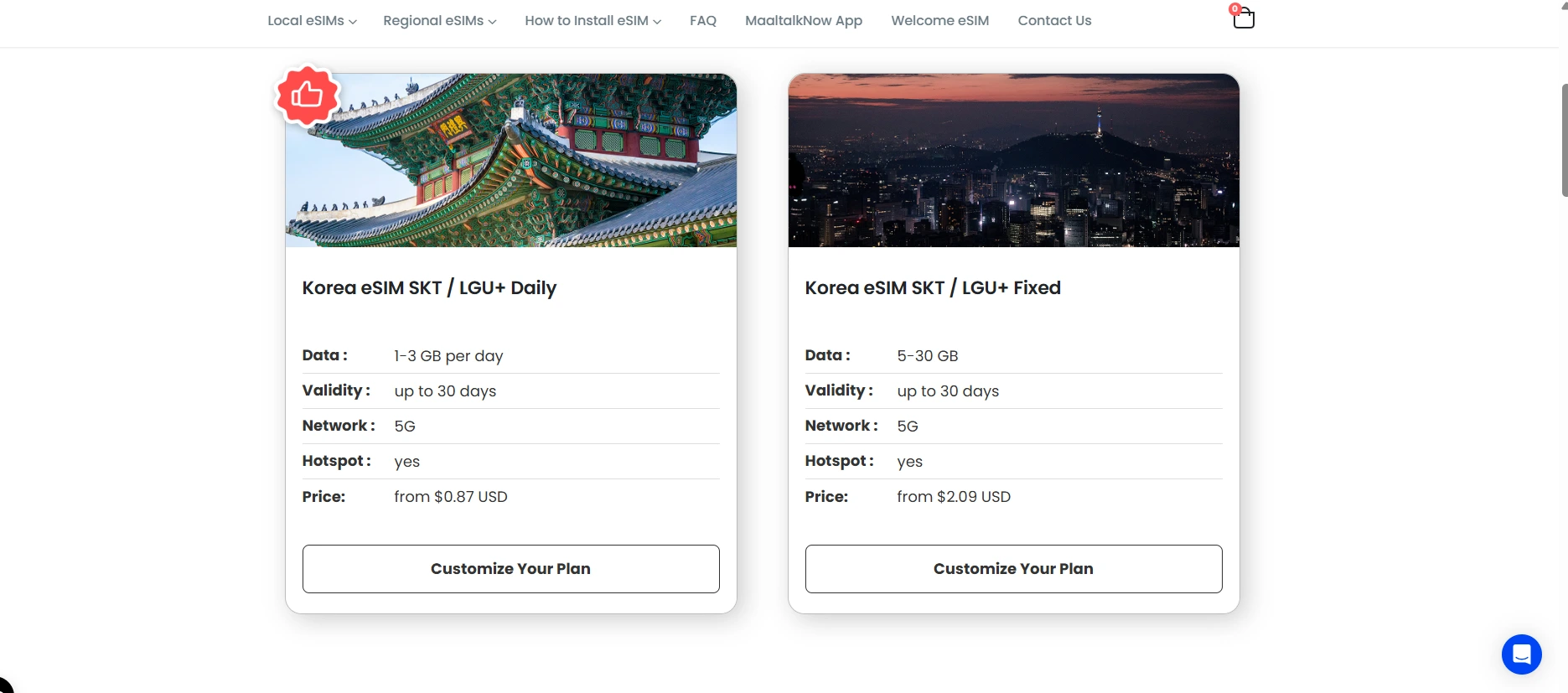
Maaltalk Pricing
- Daily data plans: from ~$0.87/day
- Fixed data plans: from ~$2.09+ depending on data amount
- Hotspot supported
- 5G included on major Korean networks
Maaltalk Advantages
- 5G coverage with high reliability
- Free 1 GB Welcome eSIM with MaaltalkNow App download
- Hotspot/tethering allowed
- Flexible data options (daily or fixed)
- Affordable pricing vs. big global brands
- Fast activation + English-friendly instructions
If you want the most balanced combination of speed, price, and convenience, Maaltalk is an ideal pick.
2. Airalo
Airalo is one of the best-known global eSIM providers and a favorite among international travelers due to its intuitive app and fast activation. Its Korea eSIMs are simple to set up and work well for short to medium trips, especially if you prefer smaller data packages.
Airalo focuses mostly on fixed-data plans, which are ideal for light-to-moderate use like maps, messaging, browsing, and occasional streaming.
Airalo Pricing
- 1–3 GB (7–15 days): ~$5–$9
- 5–10 GB (30 days): ~$13–$22
- 5G available on some plans
- Hotspot supported
Airalo Advantages
- Extremely easy app-based activation
- Good coverage for typical tourist areas
- Perfect for short city trips
- Multiple small data options
- Transparent pricing with no hidden fees
Airalo is a great pick if you want a small or medium-sized plan and value convenience.
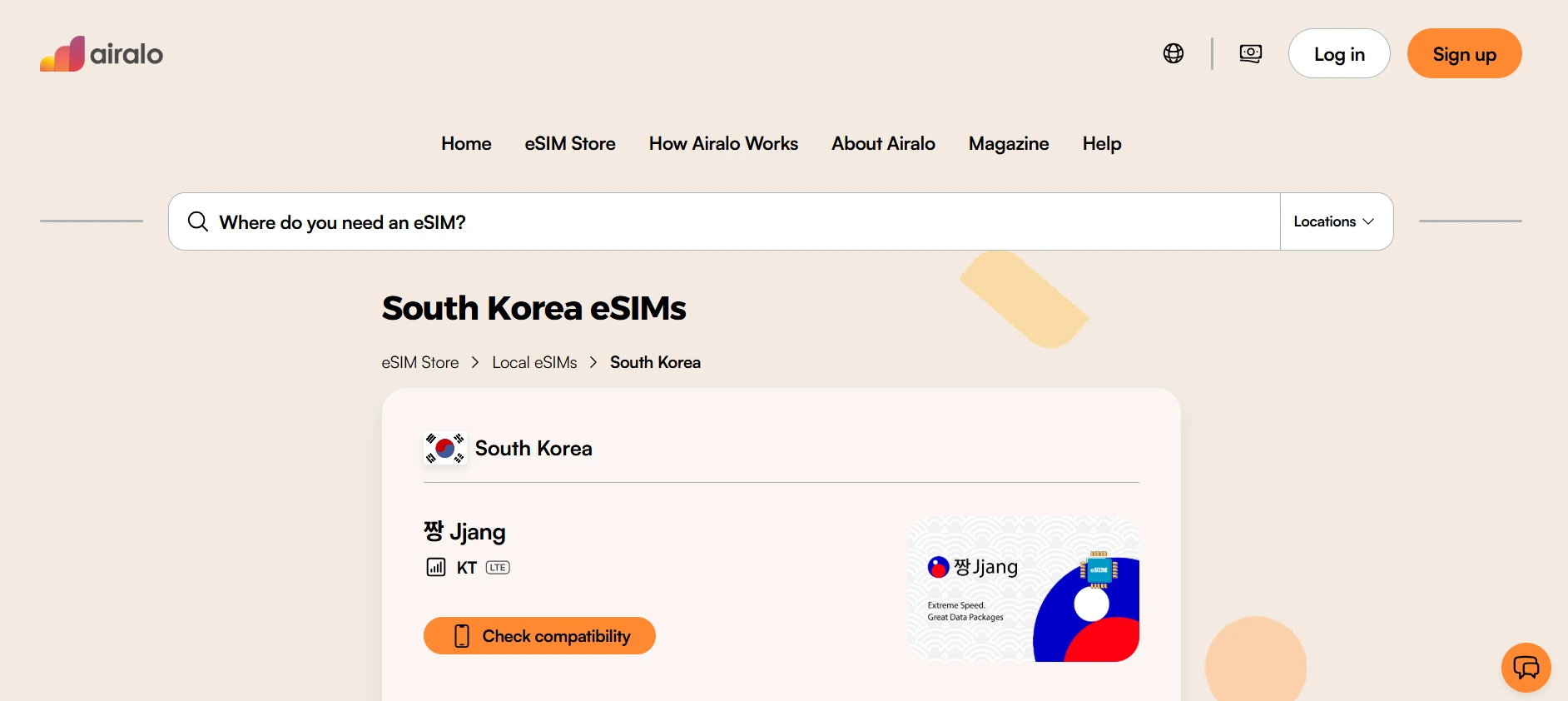
3. Nomad
Nomad offers flexible Korea eSIM options for different types of travelers, ranging from 1 GB to larger 10 GB packages. The app is simple to use, and speeds are generally reliable across major cities.
Nomad’s plans are well-priced for 1–2 week itineraries and are often cheaper than some bigger global brands.
Nomad Pricing
- 1 GB / 7 days: ~$6
- 3 GB / 30 days: ~$11
- 5 GB / 30 days: ~$14
- 10 GB / 30 days: ~$20
Nomad Advantages
- Very flexible range of data sizes
- Good for medium-term trips
- Simple app activation
- 5G available on some plans
- Good price-to-data ratio
Nomad is ideal for travelers needing a balanced mid-range plan with fair pricing.

4. Holafly
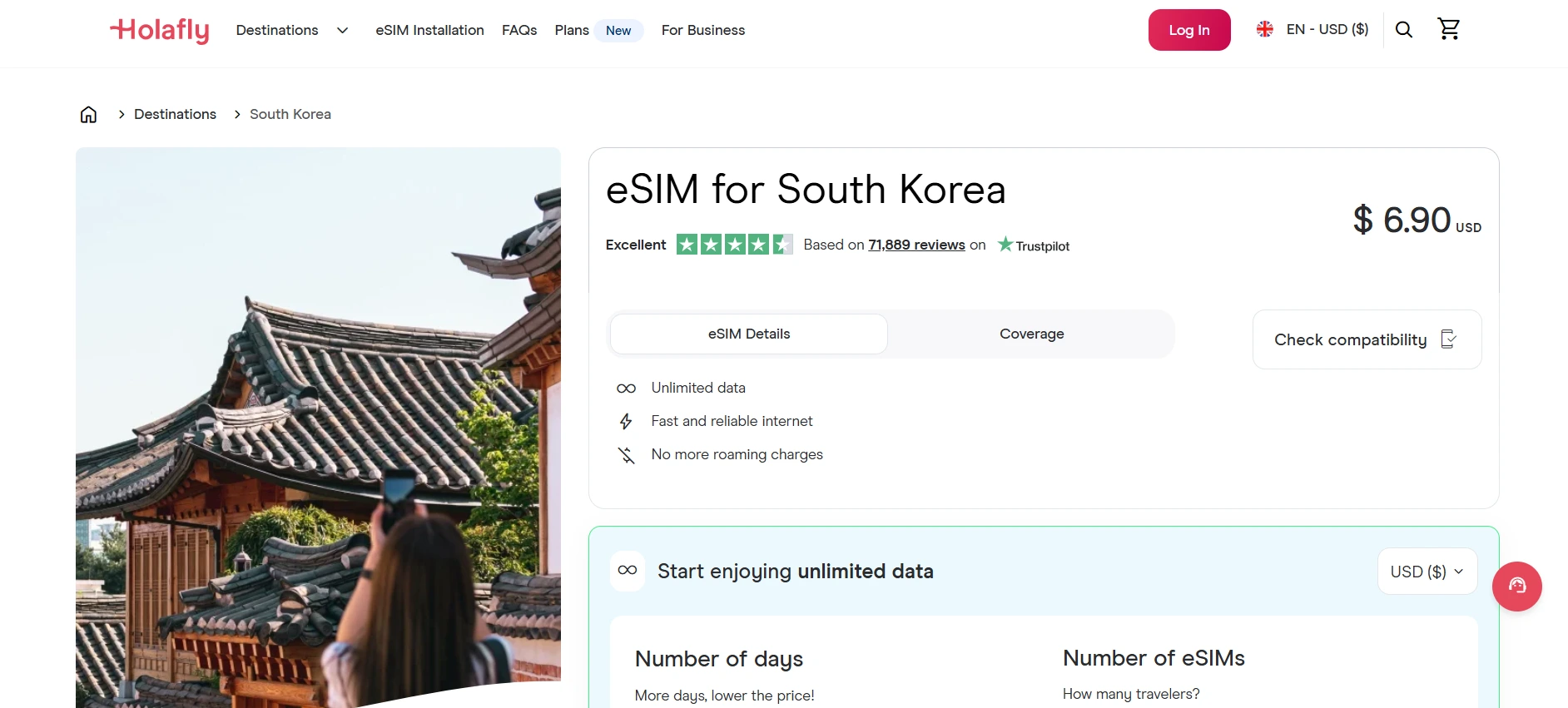
Holafly is known for providing unlimited-style data plans, making it a favorite among travelers who use a lot of mobile data. If you stream often, work remotely, or hotspot multiple devices, Holafly is one of the few global brands offering large or unlimited packages.
While usually more expensive than other providers, the unlimited nature appeals to heavy data users.
Holafly Pricing
- Unlimited-style plans from ~$29–$69 depending on duration
- Supports heavy usage (social media, streaming, video calls)
- No data overage fees
Holafly Advantages
- Great for heavy data users
- Unlimited-style data available
- Quick digital activation
- Strong reliability in major cities
- No worrying about managing GB usage
Holafly is ideal if you want the freedom of unlimited data without monitoring consumption.
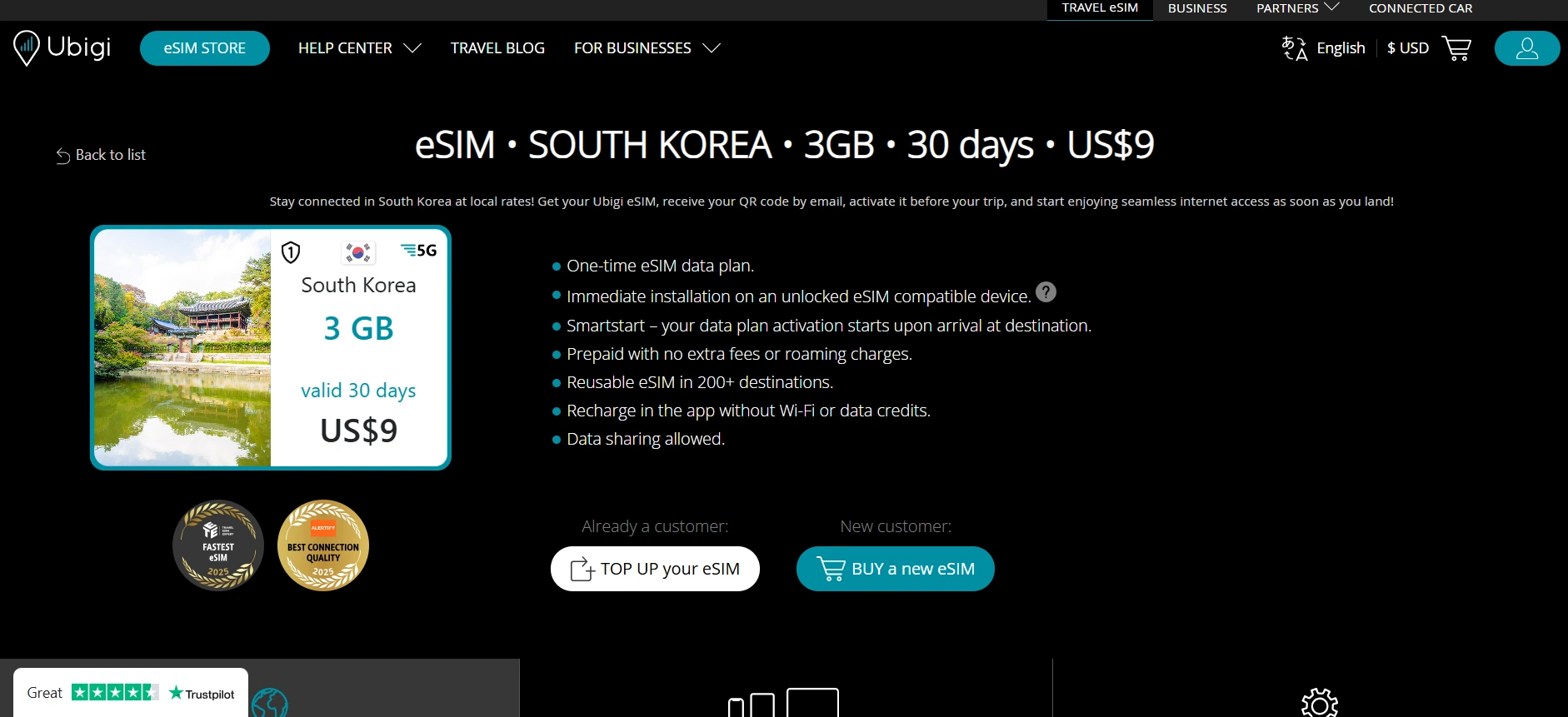
5. Ubigi
Ubigi offers some of the cheapest small data packages for South Korea, making it perfect for short stays or travelers who only need basic connectivity (maps, chat apps, transport apps, etc.).
Coverage is generally very reliable and the setup process is quick.
Ubigi Pricing
- 1 GB / 7 days:~$4
- Additional top-up options available
- Good value for minimal-use travelers
Ubigi Advantages
- One of the cheapest small plans
- Reliable coverage across major cities
- Perfect for short trips
- Easy top-ups via app
- Great for lightweight data needs
Ubigi is a strong option if you want a low-cost eSIM for basic travel essentials.
6. Woori Mobile
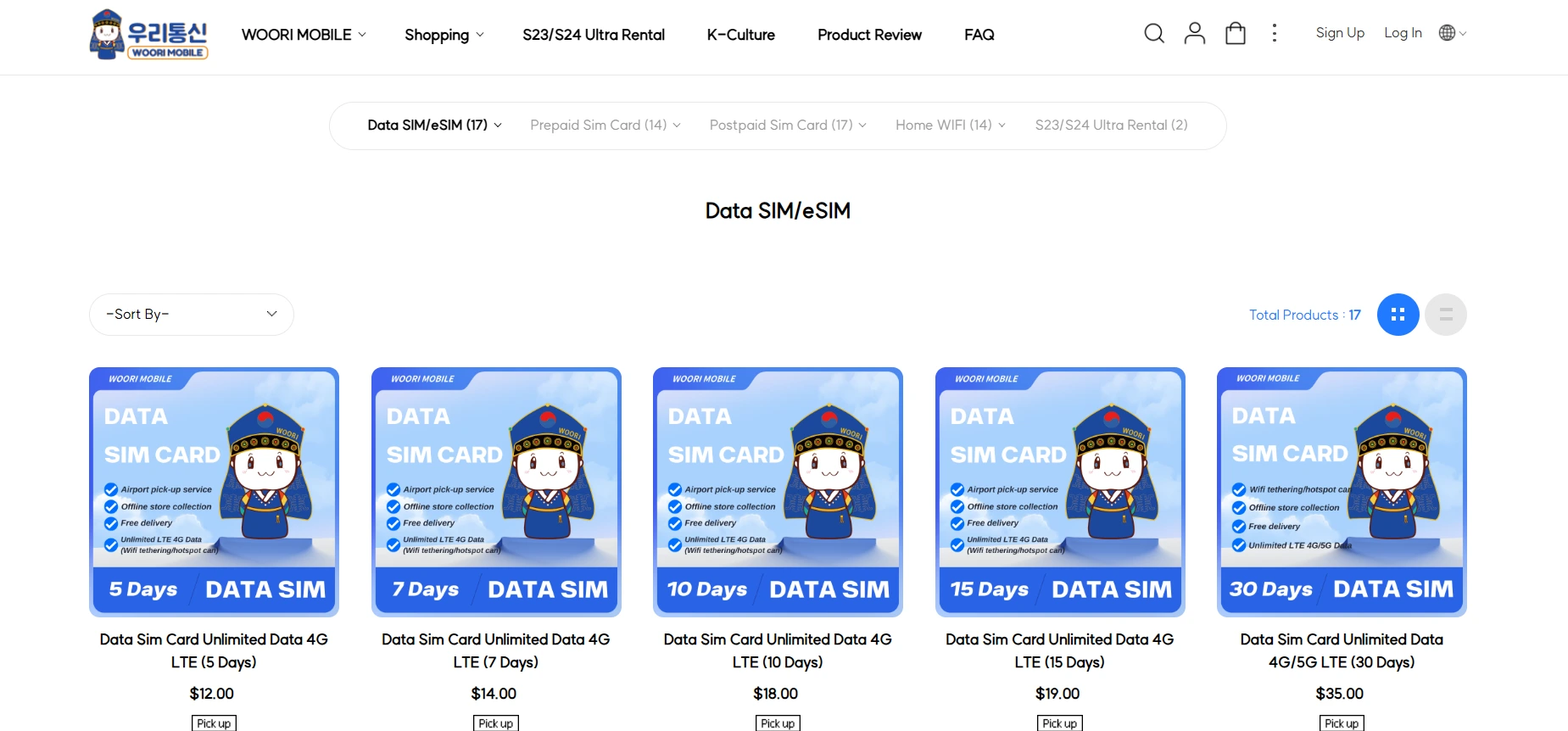
Woori Mobile is a Korean MVNO known for offering foreigner-friendly, affordable prepaid eSIM options. Their plans are popular among travelers who want unlimited-style data and Korean network-level reliability.
Woori Mobile is a great choice if you prefer a local provider over big international brands.
Woori Mobile Pricing
- Unlimited 4G/5G data — from ~$15 for 7 days
- Longer durations available at strong value
- Excellent local network performance
Woori Mobile Advantages
- Local Korean network reliability
- Unlimited-style data options
- Very budget-friendly
- Good for long stays
- Works well across the entire country
Woori Mobile is a great pick for travelers wanting local-style unlimited plans at a low price.
7. Chingu Mobile (Best Budget Local Option)
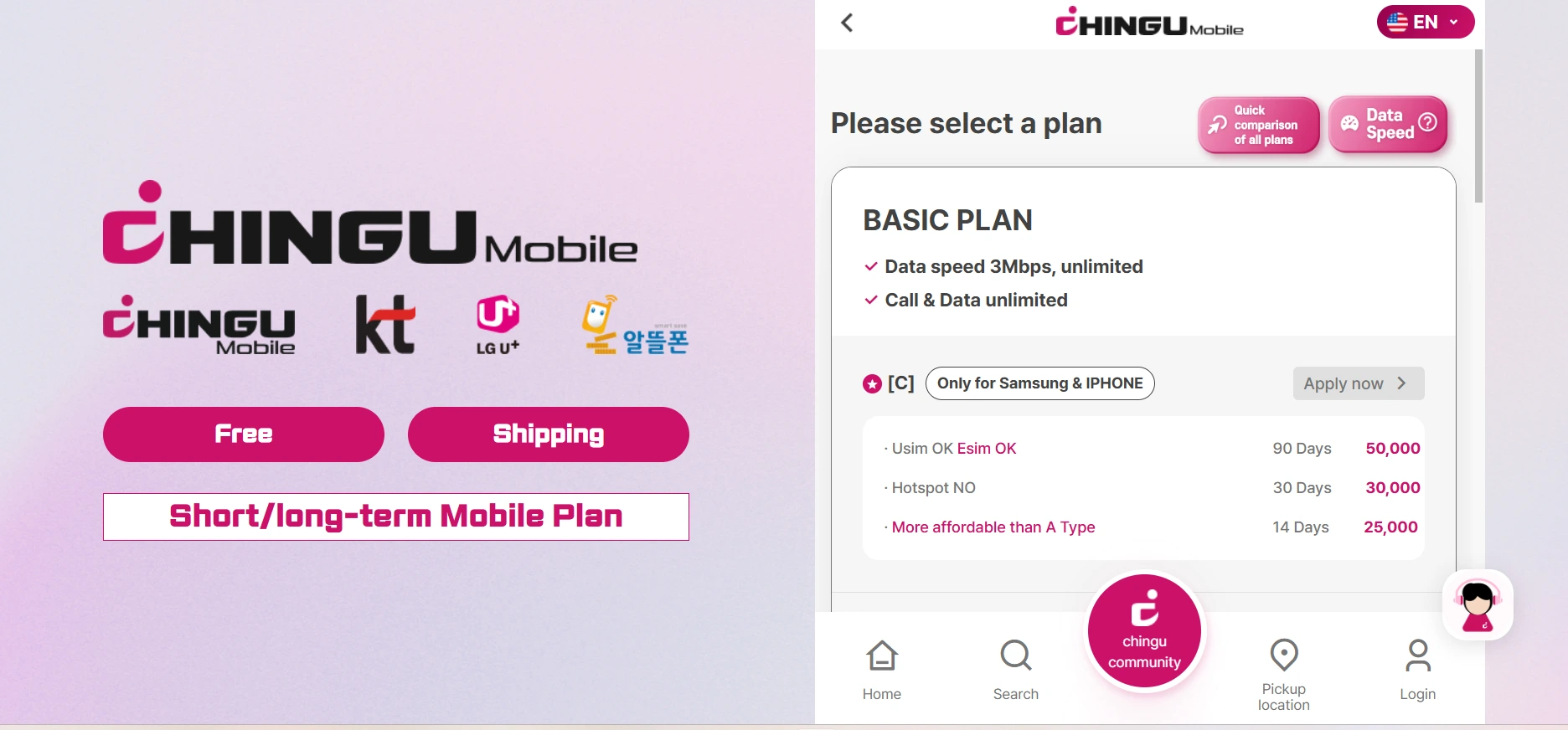
Chingu Mobile is another Korean MVNO offering affordable eSIM options for travelers. Their plans are often cheaper than international brands and popular among long-stay visitors, students, and digital nomads.
While speeds may be slightly slower than major carriers during peak times, the value is excellent.
Chingu Mobile Pricing
(Prices vary by data + duration, commonly used plans include:)
- Budget unlimited-style plans priced lower than big brands
- Multi-week and monthly options available
- Very competitive for long stays
Chingu Mobile Advantages
- Very affordable vs. global providers
- Good for long-term stays
- Often includes unlimited-style data
- Simple activation
- Works well for budget-focused travelers
Chingu Mobile is ideal if you want strong value, especially for longer visits.
8. Jetpac
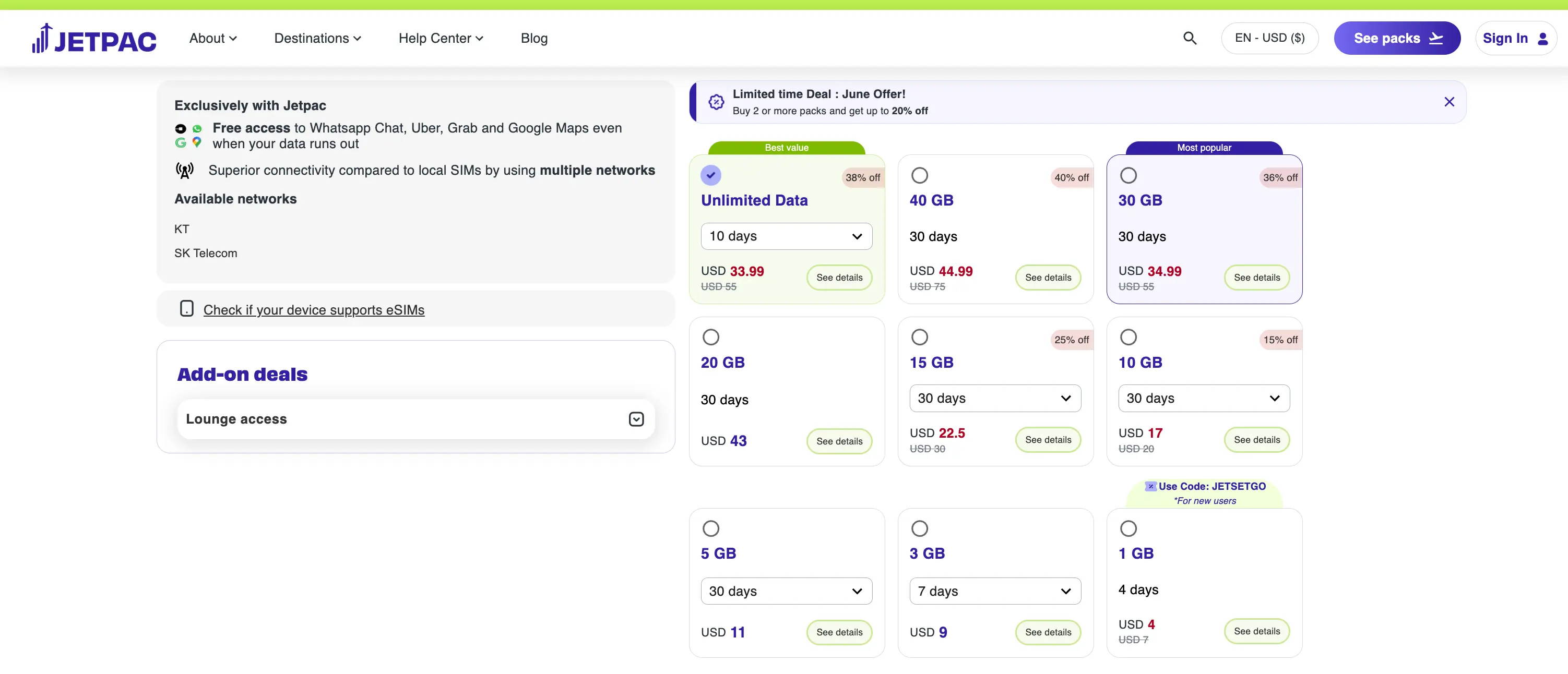
Jetpac is a newer travel eSIM provider with competitive pricing and generous data allowances. Unlike some providers that rely on a single carrier, Jetpac connects to multiple local Korean networks, helping ensure reliable coverage whether you're exploring Seoul, Busan, Jeju, or traveling between cities.
The provider is particularly attractive for travelers looking for larger data packages without paying premium prices. Setup is straightforward through the Jetpac Global app, and most users can get connected within minutes of arriving in South Korea.
Jetpac Pricing
- 3 GB / 7 days: ~$9
- 5 GB / 30 days: ~$11
- 10 GB / 30 days: ~$17
- 15 GB / 30 days: ~$22.5
Jetpac Advantages
- Uses multiple local networks (KT and SK Telecom) for reliable connectivity
- Supports 4G/5G connectivity where available
- 24/7 customer support and easy activation through the Jetpac Global app
- Unlimited hotspot/tethering support on unlimited data plans
How Much Data Do You Need in South Korea?
Here’s a rough guideline for typical usage:
| Usage Type | Estimated Daily Data |
|---|---|
| Light (maps, messaging, browsing) | 1–2 GB/day |
| Medium (social media, video clips) | 3–5 GB/day |
| Heavy (streaming, hotspotting, remote work) | 10+ GB/day |
Most travelers are perfectly fine with 3–5GB/day.
*Please note that this discount code is only valid for Korea-related eSIM products
Local Korean Networks Explained: SKT vs KT vs LG U+
South Korea has three major telecom networks, and nearly all eSIM providers - local or international - use one of these. Understanding the differences helps you choose the best plan for speed and coverage.
SKT (SK Telecom)
- Widest coverage in South Korea
- Fastest 5G speeds in most cities
- Best for rural trips, mountains, coastal areas
- Used by: Maaltalk, Chingu Mobile, some Airalo plans
KT (Olleh KT)
- Strong reliability and excellent indoor coverage
- Great for city-only travel (Seoul, Busan, Daegu)
- Often used by international eSIM providers
- Used by: Woori Mobile, some Nomad plans
LG U+
- Good balance of price + coverage
- Lower congestion in busy areas
- Often cheapest for MVNO providers
- Used by: some Maaltalk and budget MVNOs
eSIM vs Pocket WiFi in South Korea
While pocket WiFi rentals used to be popular in Korea, eSIMs have replaced them for most travelers. Here’s why:
Why eSIM Is Better
- No device to carry or charge
- No pickup or drop-off at the airport
- Much cheaper (pocket WiFi often costs $4–$8 per day)
- Hotspot built into your own phone
- Better for solo travelers
When Pocket WiFi Might Still Make Sense
- Families with multiple devices needing connection
- Travelers using older phones without eSIM support
Aside from those cases, an eSIM is almost always the superior choice.
Tips to Maximize Speed and Reliability
- Turn on 5G Auto in your phone settings
- Disable low-data mode
- Switch off VPNs unless necessary
- Use hotspot sparingly if your plan has fair-use limits
- Keep your home SIM active only for calls/SMS, not data
FAQ: Best eSIMs for South Korea
1. Do I need a physical SIM in South Korea?
No, an eSIM gives you full access to Korea’s mobile networks without visiting a shop or swapping SIM cards.
2. Can I get a Korean phone number with an eSIM?
Most global eSIM providers are data-only.
3. Does 5G work with travel eSIMs in Korea?
Yes, providers like Maaltalk offer full 5G support where available.
4. Can I use hotspot/tethering in Korea?
Yes, with most providers, including Maaltalk, Nomad, and Ubigi.
Holafly and some MVNOs may limit hotspot use depending on the plan.
5. Is eSIM cheaper than roaming?
Absolutely. U.S. carrier roaming can cost $10–$15 per day, while eSIMs start under $10 total.
